Environmental Threat in Transcarpathia: Solotvyno Sinks as Tisa River Salinity Rises
Due to the collapse of salt mines in Solotvyno, 11 tons of salt enter the Tisa River daily, while the ground in the village continues to subside.
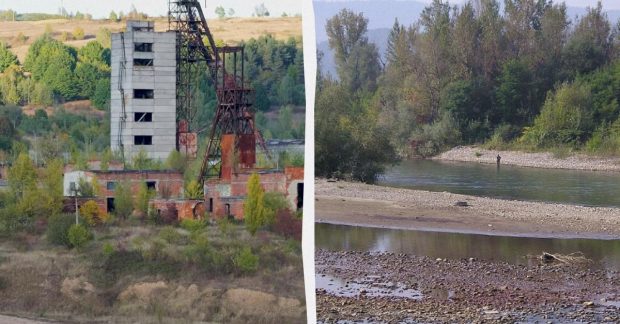 🇺🇦Ukraine
Photo: UNIAN
Key points
- 11 tons of salt enter the Tisa River daily from flooded mines.
- Over 130 residential buildings in Solotvyno are declared unsafe due to soil subsidence.
- The catastrophe was caused by Soviet mining methods and drainage neglect.
- High risk of further massive collapses remains decades after mine closures.
The village of Solotvyno in Transcarpathia has become the epicenter of an environmental crisis caused by the decay of former salt mines. According to recent studies, approximately 11 tons of rock salt leak from the flooded mines into the transboundary Tisa River every day. This process not only alters the water's chemical composition but is also accompanied by the gradual subsidence of the earth's surface, threatening residential areas.
The Legacy of Soviet Mismanagement
Problems in Solotvyno began decades ago due to inefficient management and violations of mining technologies. In the pursuit of targets, the Soviet planned economy ignored safety measures. Specifically, the use of excessive explosives led to cracks in the salt layers. Through these fissures, freshwater began to penetrate underground, dissolving salt deposits and creating massive subterranean cavities.
The situation was worsened by the deliberate dismantling of drainage systems. Former miner Karoly Takar recalls that in the 1960s, a network of ditches existed to divert freshwater, but it was later liquidated for the sake of staff "rationalization."
"Five or six years passed — and the first drops of water appeared,"the veteran worker notes, adding that once freshwater hits salt, the destruction process becomes irreversible.
Impact on the Environment and Community
Currently, giant craters filled with saltwater gape at the site of nine former mines. In certain areas of the village, the ground sinks by several centimeters each year, and over 130 houses have already been declared uninhabitable. The last working mines finally collapsed between 2008 and 2010, after which the situation was declared a national-level emergency.
- The daily discharge of salt into the Tisa is approximately 11,000 kilograms.
- Increased chloride concentrations threaten agricultural lands by degrading irrigation water quality.
- There is a risk of a sudden large-scale ground shift, which could displace massive volumes of saltwater into the river.
Experts emphasize that while current salinity levels are not yet critical for the Tisa's flora and fauna, the situation remains unstable. Additional pressure comes from the local tourism business: used water from pools and hotels is often drained directly into the river, further exacerbating environmental risks for the entire cross-border region.
Source UNIAN — unian.ua/ecology/solotvinska-solyana-shahta-chomu-v-tisu-shchodnya-… ↗
Read next
 🚨Events
Two pedestrian accidents reported in Ternopil within days
Two traffic accidents involving injured pedestrians have been recorded on the streets of Ternopil over the past few days. Both victims were hospitalized for medical care.
An Opel passenger car caught fire while driving in Bukovina
An Opel car suddenly caught fire while moving in the village of Nepolokivtsi, Chernivtsi region. Prompt actions of the driver and local firefighters helped to extinguish …
 🧠AI Analysis
Energy Challenges and Severe Weather: Ternopil Region Prepares for a Difficult Period
Energy providers explained the inevitability of power outages in the region due to grid damage and generation shortages, while forecasters warned of gale-force winds and …
 🏙️City
Snowstorms and Freezing Temps: Winter Weather to Hit Ukraine This Week
Ukraine faces a sharp drop in temperatures alongside rain and snow over the coming days. The western region will experience significant precipitation early in the week an…
 💡Tech
Ground robots in the Ukrainian army: why wheeled platforms are winning on the frontline
An analysis of modern unmanned ground vehicles shows that wheeled platforms are gaining popularity among the military due to easier maintenance, higher speed, and energy …
 🧠AI Analysis
Poland Plans to Restrict Social Media Access for Children Under 15: What It Means for Families
The Polish Ministries of Education and Digitalization have prepared a draft law setting the minimum age for social media use at 15.