Russian Missiles Over Poland: Why NATO Fighter Pilot Refrained from Shooting
During a massive strike on Western Ukraine, Russian missiles violated Polish airspace. A Swedish Gripen pilot intercepted a target but chose not to engage due to identification issues.
 🏙️City
Photo: TSN
Key points
- A Swedish Gripen pilot did not engage a Russian missile due to poor visibility and ID protocols
- Three Russian air targets violated Polish airspace at speeds over 800 km/h
- The operation involved aircraft from Poland, Sweden, and the Netherlands under NATO command
On the night of November 20, during a large-scale Russian assault on Western Ukraine, a serious violation of Polish airspace was recorded. Russian cruise missiles and kamikaze drones maneuvered in close proximity to the borders of the Ternopil and Lviv regions, prompting the Polish command to scramble fighter jets and declare a "red" alert level.
Intercept Details and Pilot's Decision
Lieutenant General Ireneusz Nowak, Operational Commander of the Polish Armed Forces, reported that a Swedish Gripen pilot, operating under NATO mission, intercepted a Russian Kh-101 missile. Although the Combined Air Operations Centre (CAOC) in Uedem, Germany, had authorized the destruction of the target, the pilot decided not to fire. The decision was driven by extremely difficult weather conditions that made it impossible to identify the target with 100% certainty, either visually or via onboard optoelectronic systems.
According to General Nowak, all safety protocols must be met before using weapons systems in peacetime.
"No weapons were used tonight because not all conditions for the use of the weapons system were met,"he explained. This highlights the Alliance's cautious approach to avoid accidental engagement of civilian aircraft or friendly assets in low-visibility conditions.
Scale of the Threat and Involved Forces
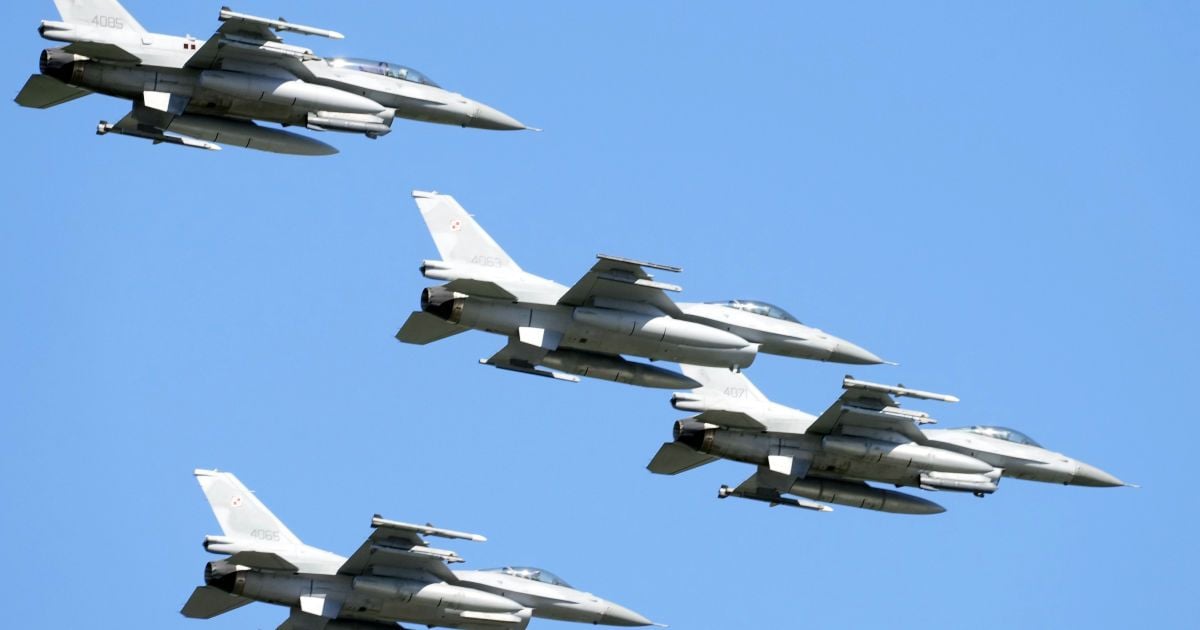
A significant air group was involved in protecting Polish skies: two Polish F-16s from the Łask airbase, two Swedish Gripens, a Saab 340 AEW aircraft, and a Dutch MRTT tanker. In total, military forces detected 11 suspicious objects, three of which crossed into Polish territory. The targets were moving at speeds exceeding 800 km/h, identifying them as either Kh-101 cruise missiles or Geran-5 jet drones.
The incident was accompanied by loud explosions in several Polish settlements, where debris was later recovered. Polish Prime Minister Donald Tusk called the event a "deliberate Russian provocation," while NATO Secretary General Mark Rutte described it as a dangerous violation of international norms. The military utilized data provided by Ukraine through the "Virazh" system to track the missile flight paths.
For residents of the Ternopil region and border areas, this event serves as a reminder of the region's vulnerability during air raids. As missiles often use complex trajectories along the border to bypass air defenses, the threat from debris or navigation errors remains high. Such provocations aim not only to strike Ukrainian infrastructure but also to test NATO's resolve at its very borders.
Source TSN — tsn.ua/politika/rosiyski-rakety-nad-polshcheiu-pilot-vynyshchuvacha-mav… ↗
Read next
 🎓Education
Simple Home Trick: How to Make Terry Towels As Soft As Feathers Again
A practical guide for Ternopil residents on how to restore the softness of stiff terry towels using simple kitchen ingredients.
 🏛️Politics
Conflict Between NABU and SBU Escalates: Alpha Special Forces in the Spotlight
The National Anti-Corruption Bureau has initiated an investigation against SBU Alpha special forces operatives over the seizure of funds during last year's searches.
 🎓Education
Night Drone Attack on Dymer in Kyiv Region: Residential Building Destroyed, 14 People Unaccounted For
Overnight into November 22, a Russian drone strike severely damaged a five-story residential building in the village of Dymer, Kyiv region. Rescuers evacuated nine people…
 🚨Events
American singer Miley Cyrus secretly marries for the second time in Palm Springs
Pop star Miley Cyrus has officially tied the knot with musician Max Morando during an intimate wedding ceremony in California.
 🚌Transport
Theatrical tours abroad: logistics challenges and the connection with home for Ukrainians
Producer Serhii Chudaiev shared insights on organizing Ukrainian theatre tours in Europe, logistical hurdles, and the emotional bond between audiences and their homeland.
 🚨Events
The Culture of Repair: Why Post-War Realities Require a New Approach to Infrastructure and Society
Reflections on how Ukrainian society learns to live amid ongoing destruction, where daily repair and adaptation become essential survival skills.